Why Digital Legal Mail is the Future of Corrections - It's Time to Act Like It
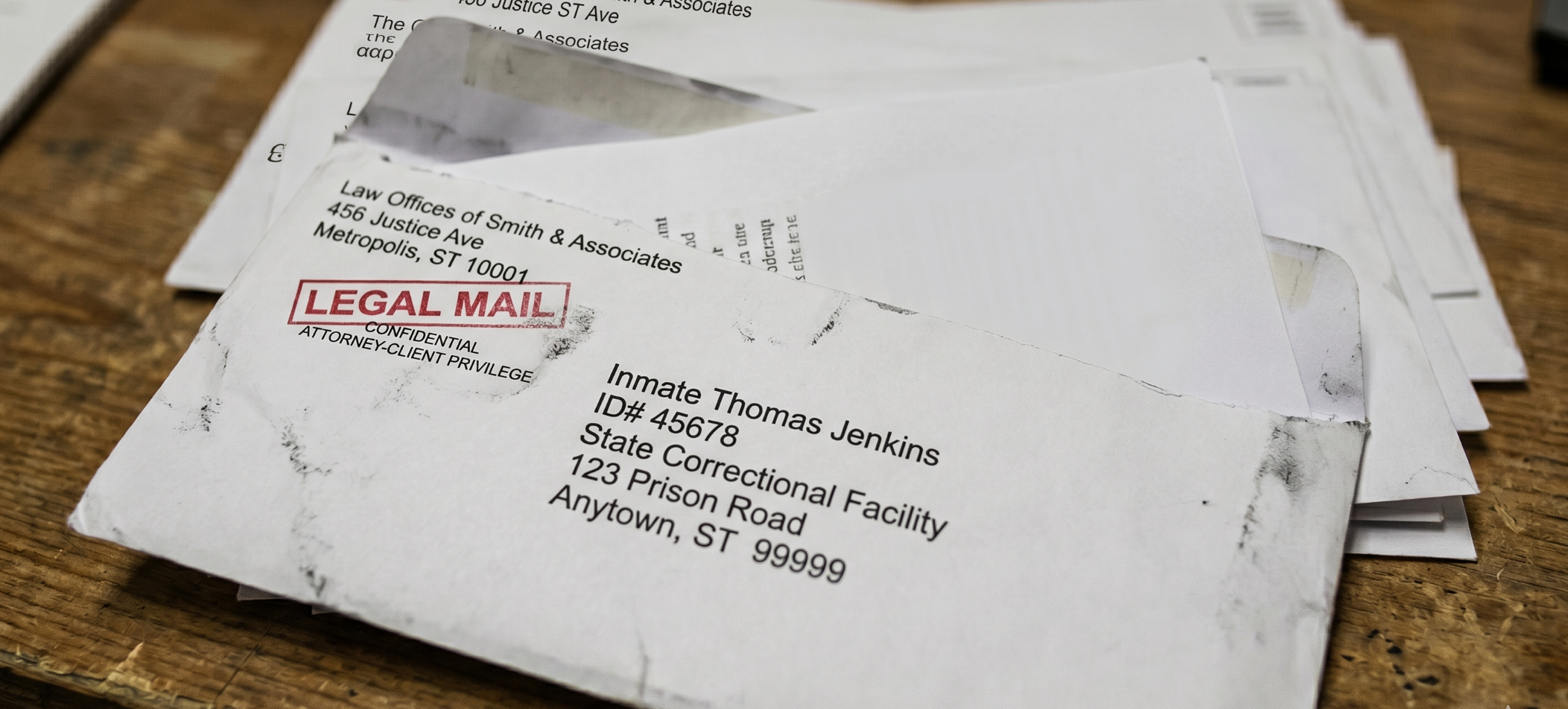
For decades, the handling of legal mail in correctional facilities has followed a familiar and largely unchanged script: an envelope arrives, staff log it, open it in the presence of the inmate, inspect it for contraband, and hand it over. Simple in theory. In practice, it is one of the most resource-intensive, legally perilous, and security-compromised processes in the entire corrections ecosystem.
The question is no longer whether digital legal mail is a better system. It is. The question is how long administrators are willing to tolerate the costs — operational, legal, and human — of the status quo.
The Physical Mail Problem Is Getting Worse, Not Better
Physical mail has become one of the most exploited vectors for introducing contraband into correctional facilities. Synthetic opioids like fentanyl and carfentanil can be absorbed into paper in quantities invisible to the naked eye and lethal in microdoses — placing both staff and incarcerated individuals at serious risk every time a piece of mail is handled. Gang communications, coded instructions, and illicit financial arrangements have long moved through the mail stream. The sophistication of those attempts has only grown.
At the same time, legal mail carries a constitutional weight that general correspondence does not. Courts have consistently held that attorney-client communications are privileged, and the mishandling of a single piece of legal mail — opened outside the inmate's presence, delayed, or lost — can expose an institution to litigation, sanctions, and claims of rights violations. The margin for error is essentially zero, and the burden of proving compliance falls squarely on the facility.
Staff time spent sorting, logging, opening, witnessing, and distributing mail is time not spent on supervision, programming, and the work of actual corrections. In large institutions processing thousands of pieces of mail weekly, this is not a minor inefficiency — it is a structural drain on capacity.
What Digital Delivery Actually Looks Like
Digital legal mail does not mean mail that is scanned into a correctional mail system. it is actually a lot simpler. It is a platform that digitally connects attorneys and their incarcerated clients. That is what we built at Lightning Law. Prosecutors are sharing digital discovery, they do not print the documents and then send them to the defense. Defense counsel save time and money using Lightning Law and everyone wins. The facility has a safer mailroom and fewer papers to be wary of during cell searches. It is just common sense.
The Legal Mail Distinction Is Solvable
The most common objection from administrators is a legitimate one: how do you handle privileged legal mail digitally without compromising the attorney-client relationship? The answer lies in verification and separation. Credentialed attorney contacts are registered in the system. Mail originating from verified legal senders can be routed directly to an inmate's device without content review. The digital record confirms receipt. The inmate can print a hard copy where printing infrastructure exists.
This is not a workaround. It is a cleaner, more auditable solution than the current process, which depends entirely on trusting that the legal mail coming in is not fake, dangerous contraband. That is an assumption that has failed time and again.
